
The definition
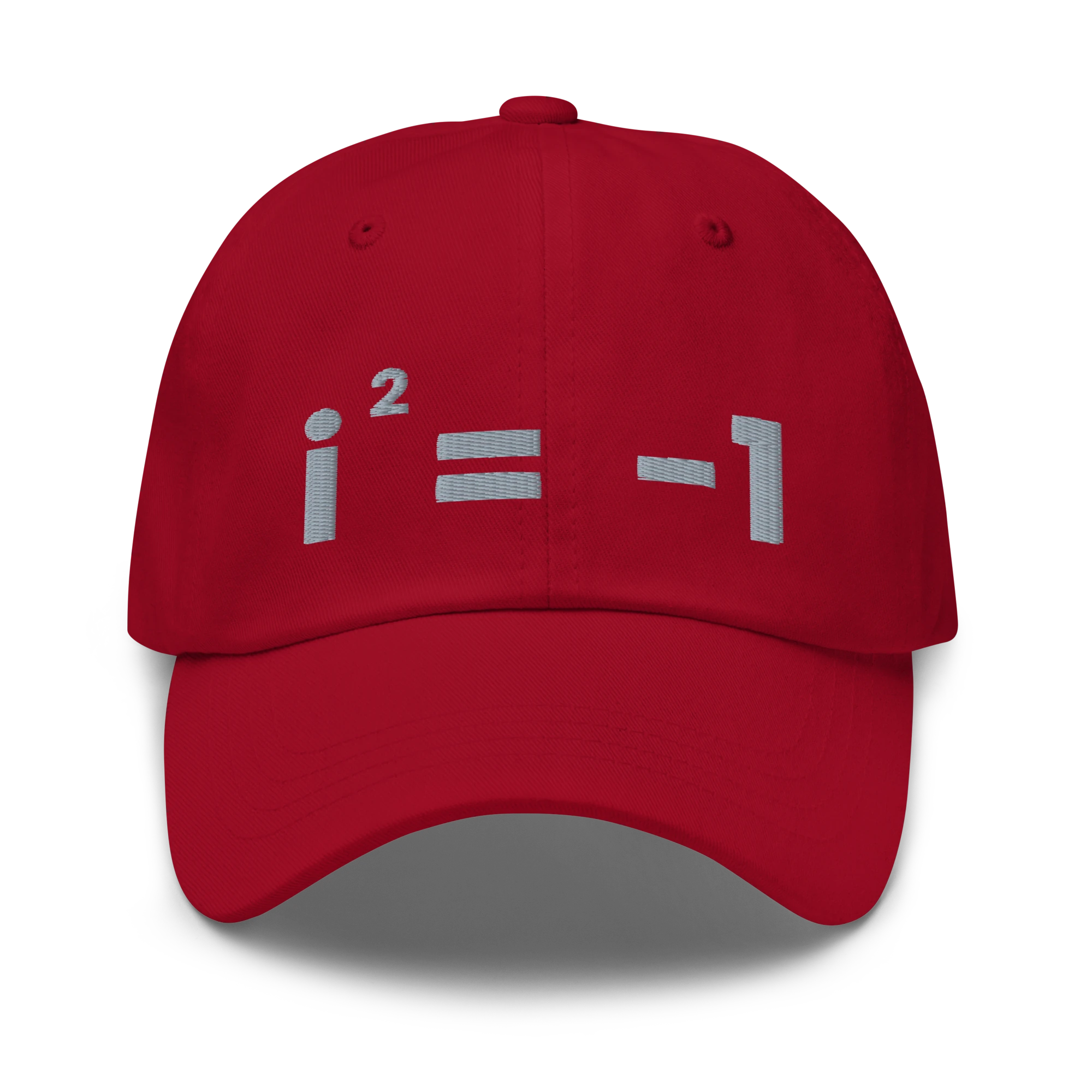
The imaginary unit i is defined so that
Equivalently, one can write i = √−1 with the usual convention for choosing the unit. Numbers of the form a + bi, where a and b are real, are complex numbers. Instead of living on a one-dimensional number line, they can be represented on a two-dimensional plane.
Why the extension matters
Complex numbers make previously unsolvable polynomial equations solvable within a larger, closed number system. More importantly, they are not confined to abstract algebra. They appear naturally in differential equations, quantum mechanics, wave physics, control theory, signal processing, fluid dynamics, electromagnetism, and many other areas.
Why engineers often use j
Electrical engineers frequently write j instead of i for the same imaginary unit because i is already the traditional symbol for electric current. That is why a signal-processing expression such as ejωt looks slightly different from the mathematician’s eiθ, even though the underlying number is the same.
Why wear it?
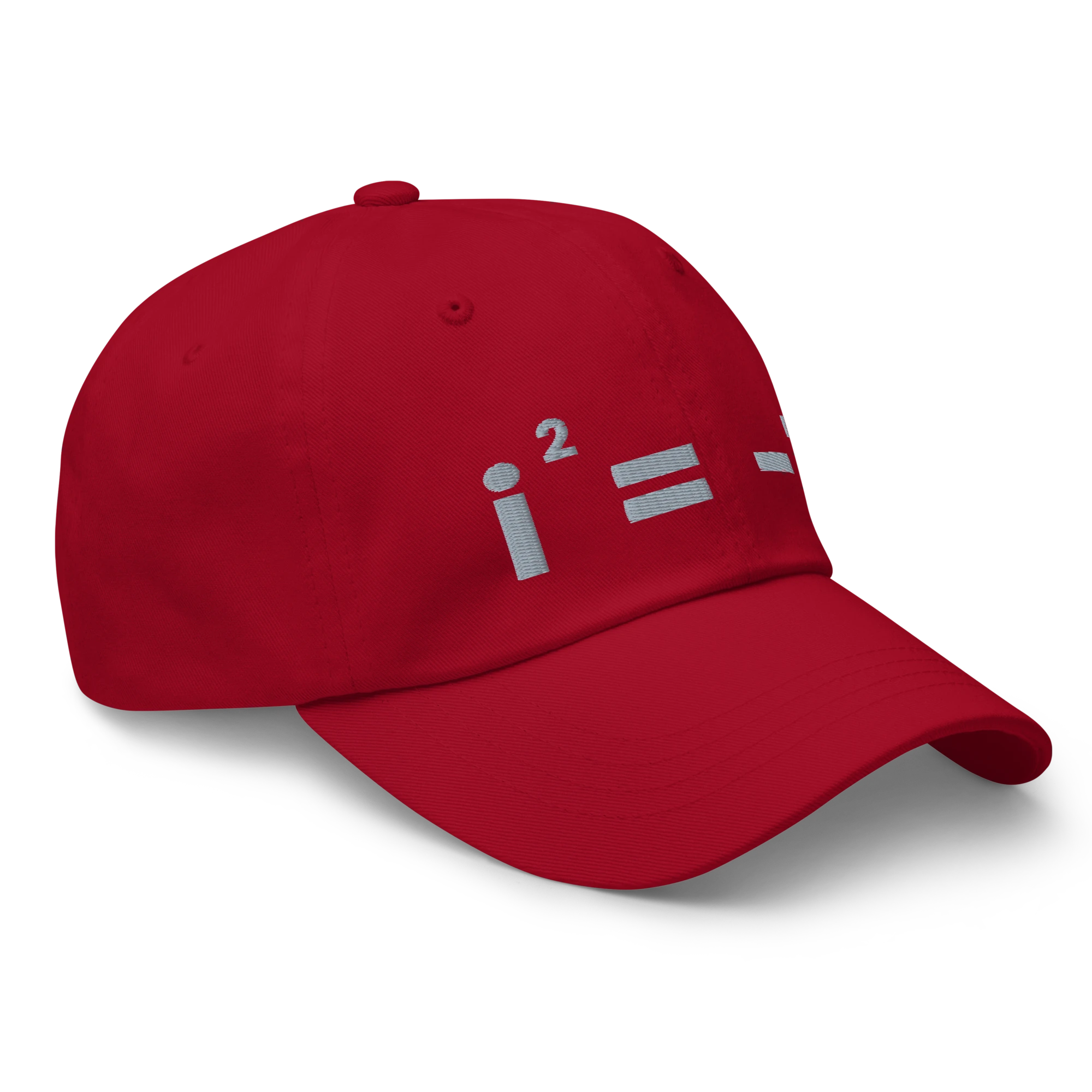
Because i² = −1 is compact, clean, and instantly recognizable to anyone who has crossed the boundary from real numbers into complex ones. It also carries one of mathematics’ best historical ironies: a number once dismissed with a name suggesting unreality became indispensable to describing the real world.
Wear what you know.
You are not wearing a random graphic. You are wearing something you know, understand, believe, study, build, play, or find worth thinking about. That is the idea behind every NerdWear Expression.