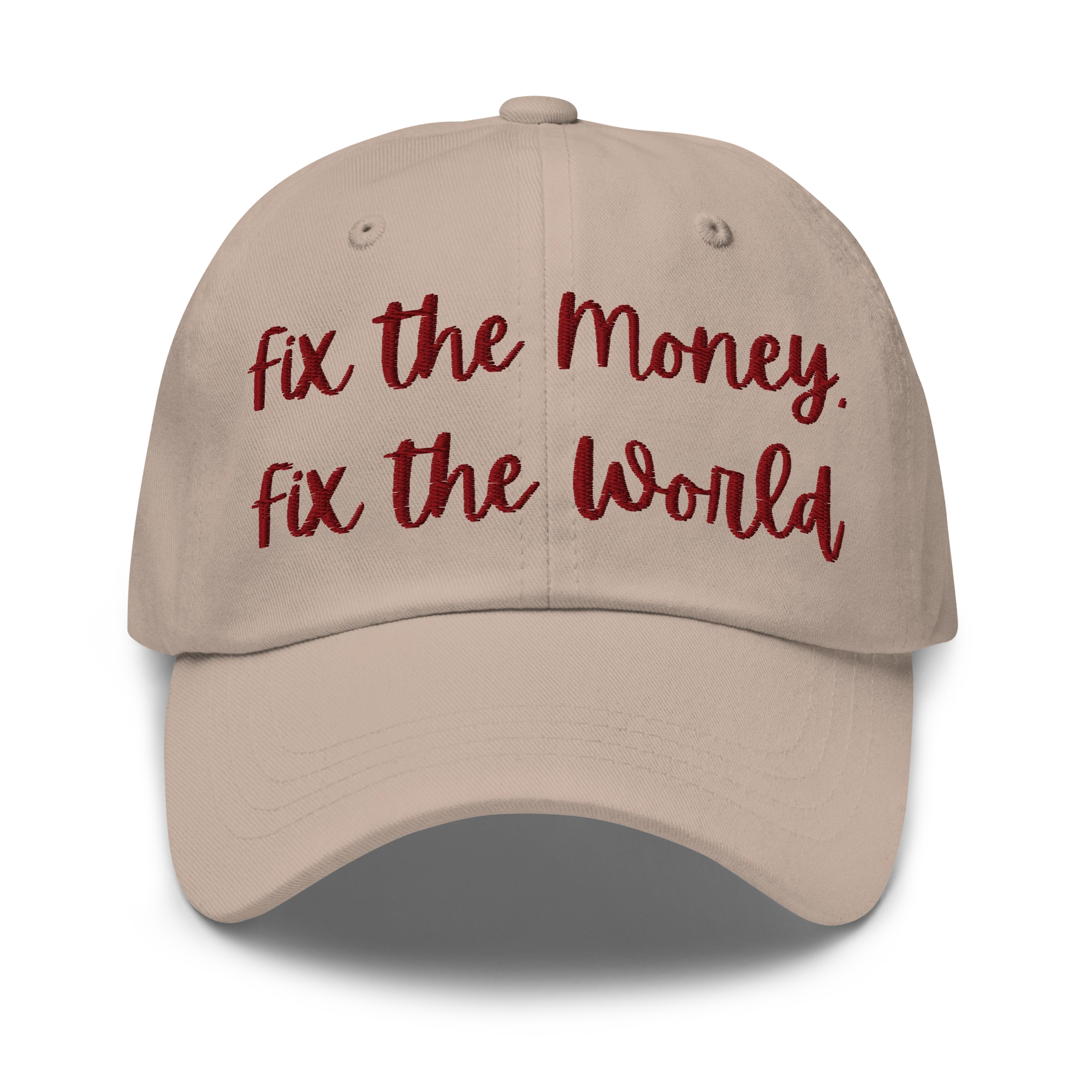


Money is infrastructure
Money is not merely the object being spent. It is a coordination technology. Prices transmit information. Interest rates affect time preferences and investment decisions. Monetary rules shape expectations about saving, borrowing, risk, and purchasing power. Different monetary schools disagree strongly about which rules are best, but they agree on the more basic point that monetary structure matters.
The phrase is a thesis, not a theorem
No monetary reform can literally fix every social problem. The wording is deliberately compressed and provocative. Its strongest interpretation is not “change one thing and utopia follows.” It is: when incentives and measurement systems are distorted, downstream decisions can be distorted too. If you care about systems, it is reasonable to care about the system used to measure and exchange value.
Why the line resonates in technical communities
Engineers and programmers are used to asking whether bad outputs originate upstream. Gamers understand economies, scarcity, incentives, exploits, and rule design. Bitcoin and other monetary-reform communities have made similar systems arguments especially visible, but the broader question is older and larger than any single technology: what properties should good money have, and what happens when those properties change?
Why wear it?
Because it invites exactly the kind of conversation NerdWear likes: one person sees a slogan; another sees a claim about incentives, monetary architecture, trust, scarcity, policy, or protocol design. You do not have to agree on the answer to think the question matters.
Wear what you know.
You are not wearing a random graphic. You are wearing something you know, understand, believe, study, build, play, or find worth thinking about. That is the idea behind every NerdWear Expression.